
What is Varnish Cache?
Varnish Cache is a downstream distribution of the Vinyl Cache open source project, delivering additional features and tooling on top of a stable release.
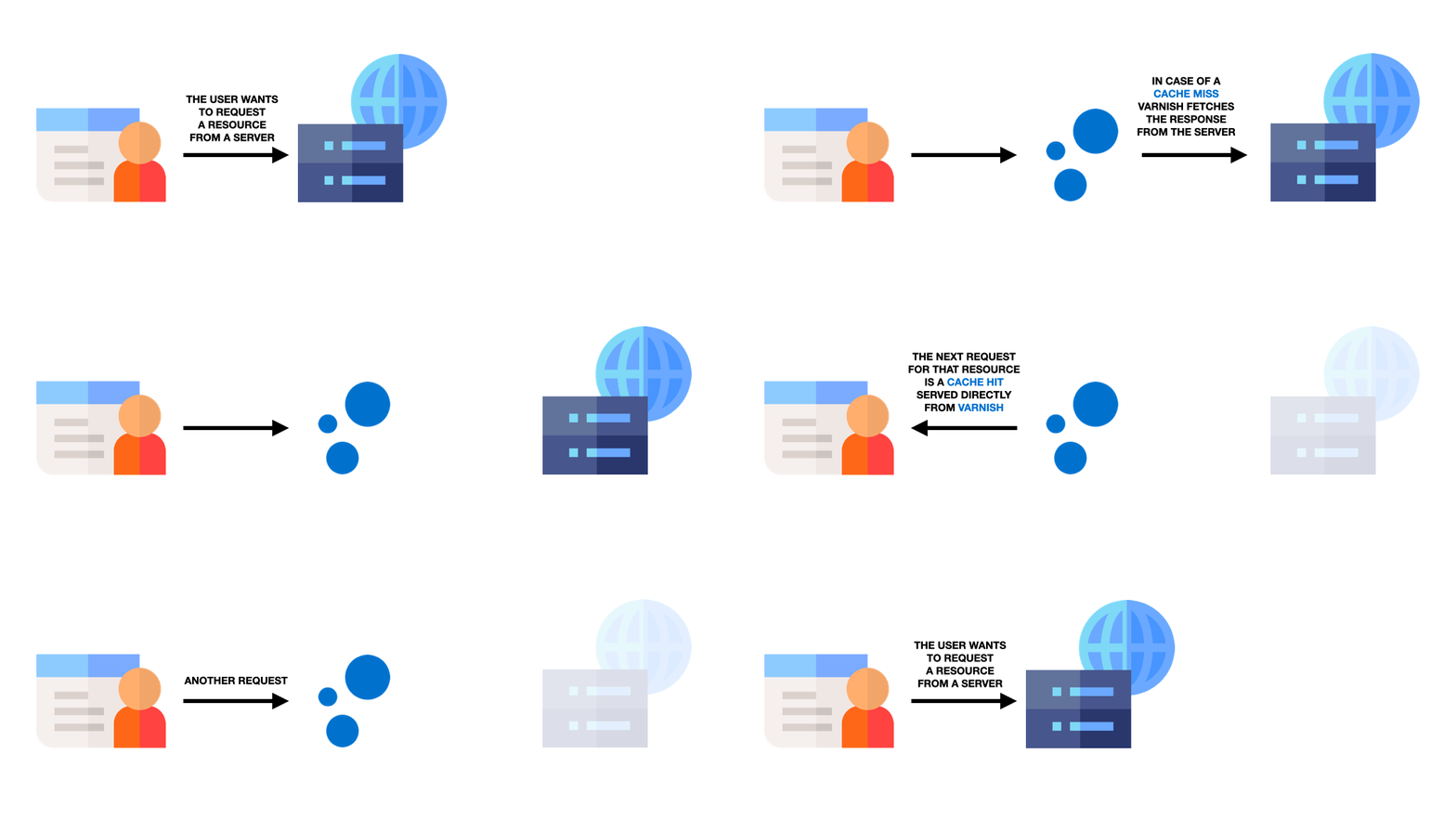
Varnish Cache acts as a reverse caching proxy that you install in front of your web server. It proxies HTTP requests and caches responses from your web server to improve performance and reduce the load on your backend servers.
Varnish versus Varnish Cache
Remember this quote?
There are only two hard things in Computer Science: cache invalidation and naming things.
– Phil Karlton
Varnish has the cache invalidation part covered, but we’ll admit that naming things is not easy.
The term Varnish represents the complete technology ecosystem that surrounds this caching technology. This includes Varnish Cache, Varnish Enterprise, and other related tools and products that are offered by Varnish Software, and by the community at large.
Varnish Cache specifically refers to the open source project. When we talk about the technology (open source or otherwise), we often just use the term Varnish.
How did Varnish Cache become a downstream distribution?
In September of 2025 the project lead of Varnish Cache decided to rename the project to Vinyl Cache. By renaming the project, the trademarks that Varnish Software has on the Varnish name no longer apply to the project, which ensures Vinyl Cache contributors have more autonomy from a trademark perspective.
The decision to rename the open source project was made based on conversations and discussions between the various parties.
The name Varnish Cache won’t disappear. Varnish Software intends to keep Varnish Cache free and open source without forking the core code. As a result, Varnish Cache becomes a downstream distribution that is based on Vinyl Cache, with additional features and tools to make it an even more compelling and broader project.
Varnish Software will also contribute to the Vinyl Cache project by contributing fixes and features upstream.
What does the future hold for Varnish Cache?
Varnish Software now fully manages the Varnish Cache distribution, which allows us to package a lot of extra features, some of which we didn’t get consensus for in the old structure. Varnish Software will continue to invest in the broader Varnish ecosystem and commits to keeping Varnish Cache relevant in an industry that keeps evolving and innovating.
Innovation is key: without the addition of modern features, Varnish Cache will lose its relevance in a cloud-native world. Expect more modern deployment platforms for Varnish, expect more features that cater to dynamic environments, and expect better integration with other systems.
While the Varnish Configuration Language (VCL) has always been the unique selling point of Varnish, we believe that Varnish Cache can cast a wider net and support other languages. It is not our intention to replace VCL with another programming language, but we would like to extend the edge computing capabilities of Varnish Cache beyond what is possible with VCL: either to run workloads written in other programming languages, or as an easy entrypoint for developers who struggle to learn VCL.
How do I get started with Varnish Cache?
Getting started with Varnish Cache is quite easy:
- We offer Linux packages for the most common Linux distributions
- We have an official Docker image
- We have an official Helm chart to orchestrate containers on a Kubernetes cluster
Visit our documentation pages, and check out the install guide to get started quickly.